
Which has more Caffeine, Espresso or Coffee

The popular convention is that espresso has a stronger punch and more caffeine than a regular cup of coffee. Is it because of the stronger taste that people convey into a stronger cup of coffee? Well you may be surprised to read that coffee has much more caffeine content than a cup of espresso.

A 12 oz cup of coffee has 240 milligrams of caffeine. Compare that to a single shot of espresso (1 oz.) which contains 75 milligrams of caffeine. Now if you were to drink 12 oz. of espresso you would be riding a rocket ship of energy since it would pack a whopping 900 mg of caffeine.

In Miami Cuban coffee is the popular far which most people also believe is stronger than regular coffee. Cuban coffee is just plain espresso loaded with several teaspoons of sugar in just one ounce. People mistake the strong take plus the sugar rush with a high caffeine content

Comments

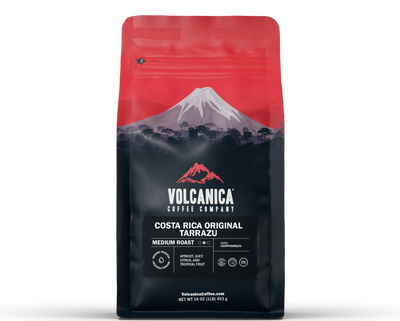
Status on our Volcanica Costa Rica Coffee

We have experience a problem with our coffee farmer in Costa Rica which has stopped shipping coffee. This was a sudden decision and unfortunately we were not ready to suddenly transition to an different coffee farm but our search has been completed. We should have this back up on our website within one week.
We have decided on a coffee that comes from the same valley in Tarrazu in the town of San Marco. We visited them a few weeks ago and the coffee is of equal high quality. This coffee also is Fair Trade and Rainforest Alliance Certified.
Rain Forest Coffee Certified Rainforest Alliance Coffee

We could have easily have purchased Costa Rican Tarrazu coffee from a wholesaler here in the states as most other coffee companies but that would go against our business mission. The problem with buying from wholesale coffee traders is that what you are buying is always in question. The Tarrazu coffee that the Costa Rican coffee board certifies is a rather broad geographic designation.

By going directly to the coffee farmer we are assured of the consistent high quality.

My apology for the delay in getting restocked but I believe that you will be please with our selection.

Comments

Coffee has no effect on CV events post-MI

Chieti, Italy - A new analysis of the GISSI-Prevenzione trial shows that moderate coffee intake does not appear to have any effect on future cardiovascular events in patients who have already had an MI. Dr Maria Giuseppina Silletta (Consorzio Mario Negri Sud, Santa Maria Imbaro, Italy) and colleagues report their results online December 3, 2007 in Circulation.

Silletta stressed to heartwire, however, that the findings can really be applied only to patients eating a Mediterranean diet who drink coffee prepared in the Italian way. Most of the participants in this study drank mocha or espresso coffee, which is unfiltered—the ground coffee beans are in contact with hot water for only a very short time, Silletta explained.

“We will tell patients that it is no problem for them to drink a moderate amount of coffee (two to four cups per day) after a heart attack, there is no cause for concern,” she said. But she noted that her team could not draw conclusions about very high coffee intake because of the small number of patients included in this category.

First to evaluate effects of coffee on a large prospective cohort of CHD patients

The Italian researchers explain that many studies have looked at the association between coffee consumption and risk of cardiovascular disease, “but the issue remains controversial.” Case-control studies suggest a harmful effect of coffee drinking on the risk of CHD, whereas prospective cohort studies show conflicting findings. And more recent studies have shown that coffee consumption may lower the risk of type 2 diabetes, they say.

But evidence is scarce on the association between coffee drinking and cardiovascular events among patients with documented CVD, they point out. Hence they decided to analyze data from a large cohort of patients who had had an MI and were enrolled in the GISSI-Prevenzione trial.

In their analysis, they included 11 231 patients with recent MI (within past three months), the majority of whom were male (n=9584). Usual dietary habits were assessed at baseline and updated at 0.5 and 1.5 years. Coffee consumption was categorized as never/almost never, low (less than two cups per day), moderate (two to four cups per day), or high (more than four cups per day).

The main outcome measure was the cumulative incidence of cardiovascular events (cardiovascular death, nonfatal MI, and nonfatal stroke). A total of 1167 events occurred during the three-and-a-half-year follow-up, with no significant differences found between the various categories of coffee drinker.

Coffee consumption and relative risk of CV events among 11 231 participants in the GISSI-Prevenzione trial

Coffee consumption

Subjects, na

CV events, n

Multivariable adjusted relative riskb

p for trend

Never/almost never

2286

210

1.00

<2 cup/d

6805

560

1.02

2-4 cups/d

5927

337

0.91

>4 cups/d

1673

60

0.88

0.18

a. The total number of subjects does not add up to 11 231 because of the time-dependent use of collected data. This means that the same subject can be counted in the table more than once, but the habit more recently associated with the event is considered to be “responsible” for the events. However, such “responsibility” is in some way “weighted” for the amount of time of the exposure.

b. Compared with abstainers (never/almost-never drinkers). Adjusted for age, gender, smoking, time from MI to enrollment, prior MI previous to index MI, body-mass index, history of hypertension, history of diabetes, peripheral vascular disease, electrical instability, results of exercise stress testing, LVEF, NYHA class, Canadian Cardiovascular Society angina symptoms, revascularization procedures, n-3 polyunsaturated fatty-acid use, vitamin-E use, antiplatelet-agent use, ACE-inhibitor use, lipid-lowering-medication use, beta-blocker use, and intake of cooked vegetables, raw vegetables, fruit, fish, olive oil, butter, cheese, and wine.

And when they analyzed stroke, MI, and sudden cardiac death separately, they also found no significant differences in CV events between the different levels of coffee drinkers. The findings on sudden death are of particular interest, they say, because there has been concern that drinking coffee might increase fatal arrhythmias.

“The present study is the first to evaluate the effects of coffee consumption on a large prospective cohort of patients with established CHD. Ultimately, coffee consumption did not change the risk of CHD events, stroke, and sudden death,” the researchers note.

Coffee and CVD: A controversial issue Silletta et al go on to discuss why the issue of coffee and CVD is so controversial. For example, two recent studies showed, respectively, a J-shaped association between coffee intake and the risk of CHD and a U-shaped association, they note.

“Can the discrepancies between the results from different studies ever be reconciled or explained?” they wonder. They discuss several factors that may have affected the conclusions of various studies, particularly the earlier ones, such as recall and selection bias, inadequate adjustment for confounding factors, and publication bias.

Other difficulties in interpreting results include variations in cup size, brewing methods for coffee preparation, amount of caffeine contained in coffee beans, and the multitude of biologically active substances that are contained in coffee—”all could contribute to misclassification of exposure and may in part explain some conflicting results.”

In addition, the development of tolerance to the effects of caffeine among habitual drinkers “adds to the complexity of the effects of coffee” and may make it hard to extrapolate short-term metabolic studies to long-term use of coffee, they conclude.

Source: www.theheart.org

Comments

Fingerprinting fake coffee

With prices of gourmet coffee approaching sticker-shock levels, scientists in Illinois are reporting development of a method to “fingerprint” coffee to detect when corn has been mixed in to short-change customers. Such adulteration of Brazilian coffee is among the most serious problems affecting coffee quality - with cereal grains, coffee twigs, and brown sugar sometimes mixed into the genuine article. The research focuses on detecting corn, probably the most widely used adulterant.

The study describes development and use on six popular coffee brands of a method for analysing one form of vitamin E in Brazilian coffee. Because roasted corn samples have high concentrations of vitamin E, it serves as a fingerprint for adulteration with corn. In laboratory tests they found that one brand of Brazilian coffee contained almost 9 percent corn. Although noting that their results are preliminary, the scientists say their new method appears to be “a significant improvement” over existing tests to detect corn adulteration. Source: Science Daily.

Comments

Blue Mountain coffee harvest damaged by Hurricane Dean

Milan - According to the International Coffee Organisation, Hurricane Dean may have damaged Jamaica’s coffee harvest, half of which is of the Blue Mountain variety.

The hurricane may have damaged coffee-processing infrastructure. Mudslides may block roads, delaying the start of the harvest, according to German research- company F.O. Licht

“Coffee farms are fairly resilient to hurricanes,” Pablo Dubois, head of operations at the ICO, said in a interview. “What is most under threat are the processing plants. There may well have been damage there.”

Norman Grant, president of the Jamaica Agricultural Society (JAS), said a preliminary assessment shows that the agricultural sector has been hit hard.

Reports are that banana fields in St. Mary and Portland have been ravaged, while cane fields in St. Thomas and St. Catherine suffered significant damage.

“From livestock to traditional tree crops to the non-traditional, (including) the coffee crop that had looked absolutely brilliant, but with the type of wind it might have suffered reasonable to substantial losses,” Grant said.

The JAS president said that because many roads remain blocked, the organisation was unable to access rural farmers to provide detailed information of the sector’s loss.

Comments

Specialty Coffees of Costa Rica To Be Awarded The Cup of Excellence®

The Alliance for Coffee Excellence, Inc. (ACE) is pleased to announced the addition of Costa Rica to its prestigious Cup of Excellence® competition line up for 2007. The Specialty Coffee Association of Costa Rica (SCACR) recently announced its plans to hold the international cupping week during May 14th to 18th and the auction June 21st. Cup of Excellence supporters are already signing up to be included on the jury and to bid at the auction.

“With the new joint venture between COE and the Specialty Coffee Association of Costa Rica we are looking forward to motivate the Costa Rica coffee producers to continue improving their agricultural coffee practices and milling, that as a result will turn into exceptional coffee quality lots,” explained Gema Siri the SCACR Executive Director. “Through the COE Program we hope more international roasters fall in love with the quality we are producing and also open new opportunities for specialty coffees of Costa Rica to be known worldwide as one of the best coffees of the world,” she continued.

Five Central American countries are now part of the Cup of Excellence program which manages the selection of the country’s finest coffees during a very stringent 3 week process involving 2 different juries. “Costa Rican coffees are known world wide for their quality and are an important part of any specialty coffee company”, explained Susie Spindler, Executive director of ACE. “These coffees will be an exciting addition to our exemplary coffee line up and will bring many buyers to the auction”.

The winning farmers will be presented their Cup of Excellence award during an emotional awards ceremony on the evening of May 18, 2007 when farmers, press, dignitaries and the international jury anxiously will await the winners’ names to be announced.

The Costa Rican program will mark the thirty-third competition for the Cup of Excellence program since it’s beginnings in 1999. Other current countries to host the program include Brazil, Nicaragua, Guatemala, El Salvador, Honduras and Colombia. The Cup of Excellence program is managed by the non-profit Alliance for Coffee Excellence, Inc, The state of the art Cup of Excellence auction has been managed in partnership with CommoditiesOne, a leading software development firm since 2002. For more information about the Cup of Excellence program, to become a member and to learn more about Costa Rica’s finest coffees log on to www.scacr.com

Comments

Illegally grown coffee is being exported to at least 52 countries.

Coffee lovers the world over are unknowingly drinking coffee that was illegally grown inside one of the world’s most important national parks for tigers, elephants and rhinos, according to an investigative report released by World Wildlife Fund (WWF). Illegally grown coffee from Indonesia is mixed with legally grown coffee beans and sold to such companies as Kraft Foods and Nestle among other major companies in the United States and abroad.

WWF tracked the illegal cultivation of coffee inside Indonesia’s remote Bukit Barisan Selatan National Park (BBS) all the way through its export routes to multinational coffee companies and the shelves of grocery stores across the United States, Europe and Asia using satellite imaging, interviews with coffee farmers and traders, and by monitoring coffee trade routes.

Trade of illegal coffee is possible because neither exporters nor importers have any mechanisms in place to prevent the illegal beans from entering the supply chains. Bukit Barisan Selatan, a World Heritage Site on the southern tip of Sumatra Island, is one of the few protected areas where Sumatran tigers, elephants and rhinos coexist. It has already lost nearly 30% of its forest cover to illegal agriculture, most of which is for coffee production.

Indonesia is the world s second-largest exporter of robusta, a kind of bean often used in instant and packaged coffee sold in supermarkets. At least half the country s coffee is exported through the port of Lampung, adjacent to the national park. WWF s investigation found farmers growing coffee on more than 173 square miles of park land (about two-thirds the size of Chicago) and producing more than 19,600 tons of coffee there each year. Most wildlife has already abandoned the sections of the park that have been illegally converted to coffee plantations. Illegally grown coffee is exported to at least 52 countries.

Comments

Coffee Addiction Hard To Let Go

More than half of Americans drink coffee daily, according to research at Syracuse University. For many, coffee’s jolt is the best part of waking up.

“I couldn’t live without it, I drink it every day,” said a Hartford construction worker who said he drinks at least six cups of coffee before he arrives at work.

Dr. Laura M. Juliano, an assistant professor at American University’s Department of Psychology, has studied coffee and its affect on people.

“It feels good. It’s a stimulant drug, so it makes people feel happy, more talkative, more sociable, more awake and alert,” she said. “It has a rewarding effect on the brain chemicals. It’s no different really from all drugs taken for recreational purpose, such as tobacco or alcohol.”

Coffee or cola?

While typical soft drinks can provide a similar effect, the amount of caffeine they deliver generally is significantly lower. Research has shown that the beneficial effects observed in coffee are not replicated in other drinks.”The caffeine in coffee tends to have a bigger bang for the buck,” Juliano said.Sue Gebo, a registered dietitian in Hartford, Conn., pointed out that coffee tends to serve as the better drink over soft drinks because the typical soda contains more than 100 calories, compared to a cup of black coffee, which has almost no calories.”It’s the stuff people add to coffee — the cream, the extra cream, the sugar — that can add 60 or more calories in a large coffee,” Gebo said. “Then, the flavored syrups add significantly more calories.”Gebo also explained that coffee can camouflage normal hunger signals, but that wears off through the day.”People are more likely to get out-of-control hungry when the caffeine wears off. When people are trying to lose weight, they might get into trouble,” Gebo said.As with anything we consume, however, side effects can accompany the benefits of caffeine in coffee. Read full article.

Comments

Burger King Corp. is in discussions with manufacturers to license its BK Joe coffee brand.

Burger King Corp. is in discussions with manufacturers to license its BK Joe coffee brand into grocery brand extensions that include bottled coffee, beans, ground coffee, coffee soda, and confections, the Broad Street Licensing Group said. “BK Joe is the hard-working coffee for people who work hard,” said Bill Cross, partner at Broad Street Licensing and director of food-to-food programs, in a statement.

The product comes in decaf, regular, and “turbo.” Cross indicated that discussions were already underway with coffee marketers, and will include new retail products such as coffee sodas meant to compete against energy drinks, and coffee-flavored frozen novelties aimed at a slightly older demographic than traditional ice cream treats. “BK Joe gives consumers another means to Have It Your Way ,” said Russ Klein, president, global marketing, strategy, and innovation, Burger King Corp. and president of Burger King Brands, Inc. “Broad Street Licensing Group s long experience with food brands gives them a thorough understanding of the markets we want to extend BK Joe into.”

Comments

Costa Rica green coffee exports were up 18.5 % year.

Costa Rica green coffee exports were up 18.5 % year on year to 45’599 bags in October the Costa Rican Coffee Institute reported this week. Harvesting of the new crop does not begin in earnest until the middle of November, although picking has begun in the south of the country. Most of the October exports were from rollover stocks ,remaining from the previous crop year. Costa Rica exported 1.407 million bags of coffee in the 2005/06 coffee year, 12.2 % down on the 2004/05 season.

Comments

« Previous entries ·